



Devutthana Ekadashi 2026: Awakening Lord Vishnu and Beginning a New Season of Auspiciousness

Devutthana Ekadashi will be observed on Friday, 20 November 2026, according to the Delhi Smarta Ekadashi calendar. Kartika Shukla Ekadashi begins on the morning of 20 November and ends early on 21 November. Some Vaishnava traditions observe Gauna or Vaishnava Devutthana Ekadashi on Saturday, 21 November, so devotees should follow the calendar and tradition observed by their family or spiritual community.
Also known as Dev Uthani Ekadashi, Prabodhini Ekadashi or Devotthan Ekadashi, the festival marks the symbolic awakening of Lord Vishnu after the period of Chaturmas. Traditional observance describes Lord Vishnu as entering Yoga Nidra around Devshayani Ekadashi and awakening on Devutthana Ekadashi. The conclusion of this period is also associated with the resumption of many auspicious ceremonies in Hindu tradition.
The idea of divine awakening gives this Ekadashi a particularly meaningful message. During Chaturmas, devotees may adopt greater discipline, fasting, reduced indulgence, prayer or other spiritual practices. Devutthana Ekadashi provides an opportunity to look at what has changed during those months. The question is not simply whether Lord Vishnu has “awakened” according to tradition, but whether something within us has also become more awake.
Spiritual sleep does not necessarily mean physical tiredness. We can move through daily routines while paying little attention to how we speak, spend money, manage relationships or use our time. Habits slowly become automatic. Devutthana Ekadashi can therefore become a day to become conscious again to notice what we are doing and decide whether it still reflects the values we wish to follow.
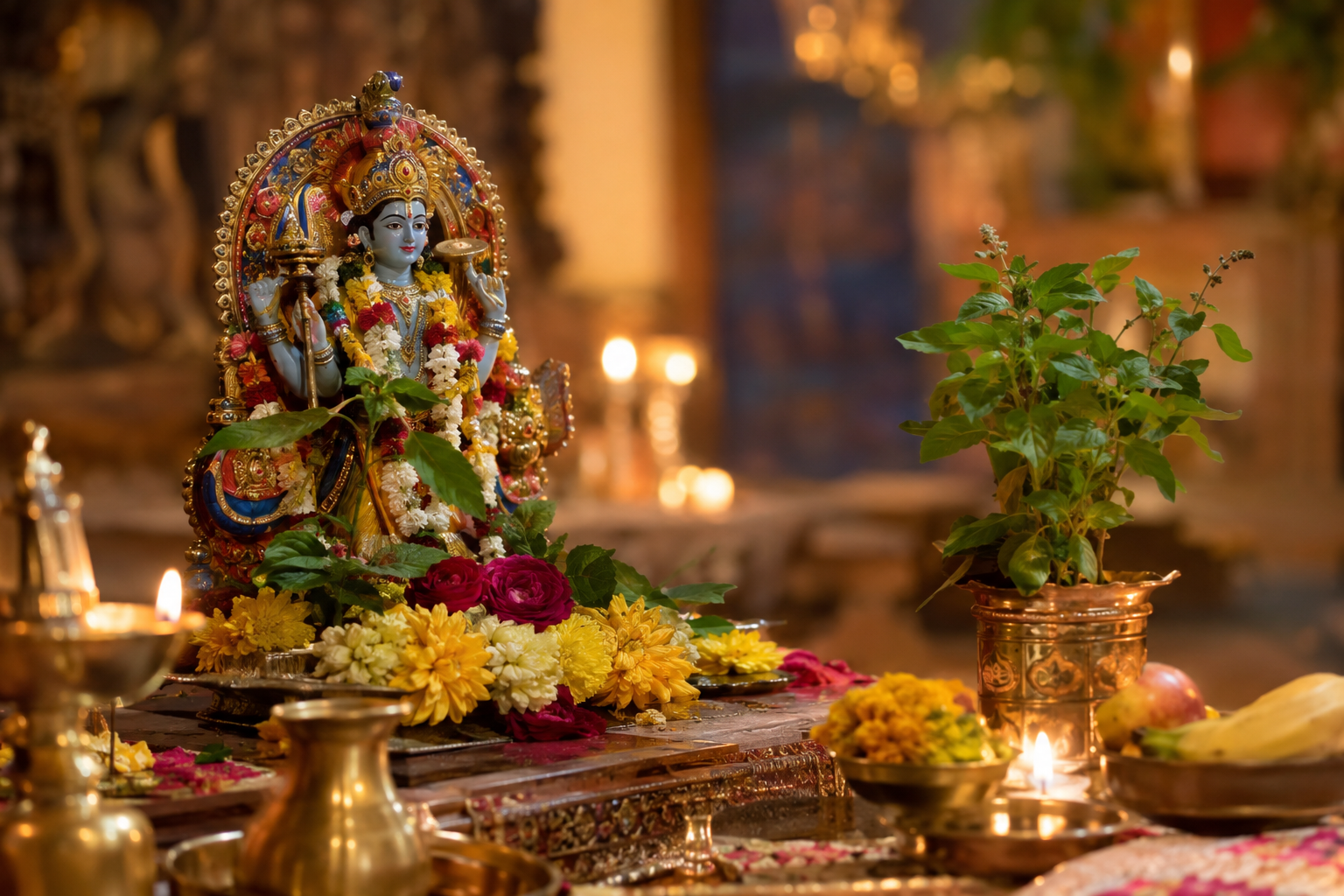
Devotees may begin the morning with a bath, clean clothes and the preparation of a peaceful puja space for Lord Vishnu. An image or idol of Vishnu or Shri Krishna may be decorated with flowers. Tulsi leaves, fruits, sweets, incense, diya and other traditional offerings may be arranged according to family practice. Chanting “Om Namo Bhagavate Vasudevaya,” reciting Vishnu prayers or listening to the Devutthana Ekadashi vrat katha can help create a focused devotional atmosphere.
As with other Ekadashi observances, fasting practices differ. Some devotees observe a strict fast, while others consume fruits, milk or permitted vrat foods. Grains are commonly avoided in many Ekadashi traditions. Health, age, pregnancy, medication requirements and other personal circumstances should always be considered. The purpose of the vrat is to create discipline and spiritual concentration, not to measure devotion through physical discomfort.
The fast can also extend beyond food. A devotee may decide to avoid gossip, unnecessary arguments, excessive entertainment or constant social-media use for the day. Sometimes putting the phone away for an hour and sitting quietly with a mantra can create more spiritual awareness than simply changing the menu.
Devutthana Ekadashi also marks the conclusion of Chaturmas in traditional practice. Drik Panchang notes that the Chaturmasya observance is connected from Devshayani Ekadashi through Devotthan Ekadashi and that auspicious activities traditionally resume with Devotthan. For many families, this period therefore signals the return of wedding ceremonies and other mangal karya after the seasonal pause.
This transition gives the festival an atmosphere of fresh beginnings. Families planning marriages, housewarming ceremonies or other important events may view Devutthana Ekadashi as the opening of a new auspicious season. However, exact muhurats for any individual ceremony still depend on the local panchang and other traditional considerations; the Ekadashi itself should not be treated as an automatic universal muhurta for every event.
Tulsi worship is also closely associated with this period. In the 2026 Delhi calendar, Tulsi Vivah is listed on Saturday, 21 November, alongside Gauna and Vaishnava Devutthana Ekadashi. Tulsi is deeply associated with Lord Vishnu and occupies a sacred place in many Hindu homes. Families preparing for Tulsi Vivah may begin cleaning and decorating the Tulsi plant area on Devutthana Ekadashi, preparing it for the following celebration according to their tradition.
The connection with Tulsi also gives the festival a simple lesson in care. A sacred plant cannot remain healthy because it receives one elaborate puja each year. It survives through regular watering, sunlight and attention. Relationships and spiritual practices work in much the same way. Occasional grand gestures cannot replace steady care.
Children can participate in Devutthana Ekadashi by helping decorate the altar, offering flowers or watering the Tulsi plant. Parents may explain the concept of Chaturmas in simple language: Lord Vishnu is traditionally believed to rest for four months and awaken on this day, reminding us that periods of quietness are eventually followed by renewed activity.
Families could also ask children what they would like to “wake up” in themselves. Perhaps they want to become more organized, read regularly, help grandparents more often or spend less time on screens. The metaphor of awakening becomes easier to understand when connected with a real habit.
For a simple home puja, a Daily Puja Kit can help keep common worship essentials ready. A Traditional Puja Thali Set may be used to arrange Tulsi leaves, flowers, roli, akshat and prasad, while Floating Oil Wicks provide a convenient option for the morning or evening diya.
The conclusion of Chaturmas can also become a moment of self-review. If a person made a spiritual commitment several months earlier, Devutthana Ekadashi is an appropriate time to ask whether it was maintained. If not, there is no need for discouragement. Spiritual practice is not strengthened by guilt. It becomes stronger when we honestly recognise where we stopped and begin again.
That may be the most valuable meaning of Prabodhini the awakening.
We do not need to wait for a perfect Monday, a new year or another festival to correct our direction. Awareness itself can become a beginning.
Lord Vishnu represents preservation, stability and the order that sustains life. Worship on Devutthana Ekadashi can therefore inspire us to protect what is already valuable: family relationships, health, ethical work, useful traditions and spiritual habits.
As the diya is lit before Lord Vishnu, devotees can make one simple sankalp for the season ahead. It may be to pray more regularly, communicate more patiently, spend more responsibly or complete a responsibility that has been postponed.
May Lord Vishnu awaken wisdom, discipline and compassion within every devotee. May the conclusion of Chaturmas open a season of auspicious beginnings, and may Devutthana Ekadashi 2026 bring stability, prosperity and spiritual clarity to every home.
For authentic puja products, daily worship essentials, puja thalis, diyas and oil wicks, visit Puja Samagri Online.
#DevutthanaEkadashi #DevUthaniEkadashi #DevutthanaEkadashi2026 #PrabodhiniEkadashi #DevotthanEkadashi #Ekadashi2026 #LordVishnu #VishnuPuja #Chaturmas #ChaturmasEnds #TulsiVivah #TulsiPuja #KartikaMonth #EkadashiVrat #OmNamoBhagavateVasudevaya #AuspiciousBeginnings #FamilyDevotion #HomePuja #DailyPujaKit #PujaThali #OilWicks #HinduFestivals #PujaSamagriOnline