



Diwali 2026: Lighting the Home, Worshipping Lakshmi-Ganesha and Sharing Prosperity with Gratitude

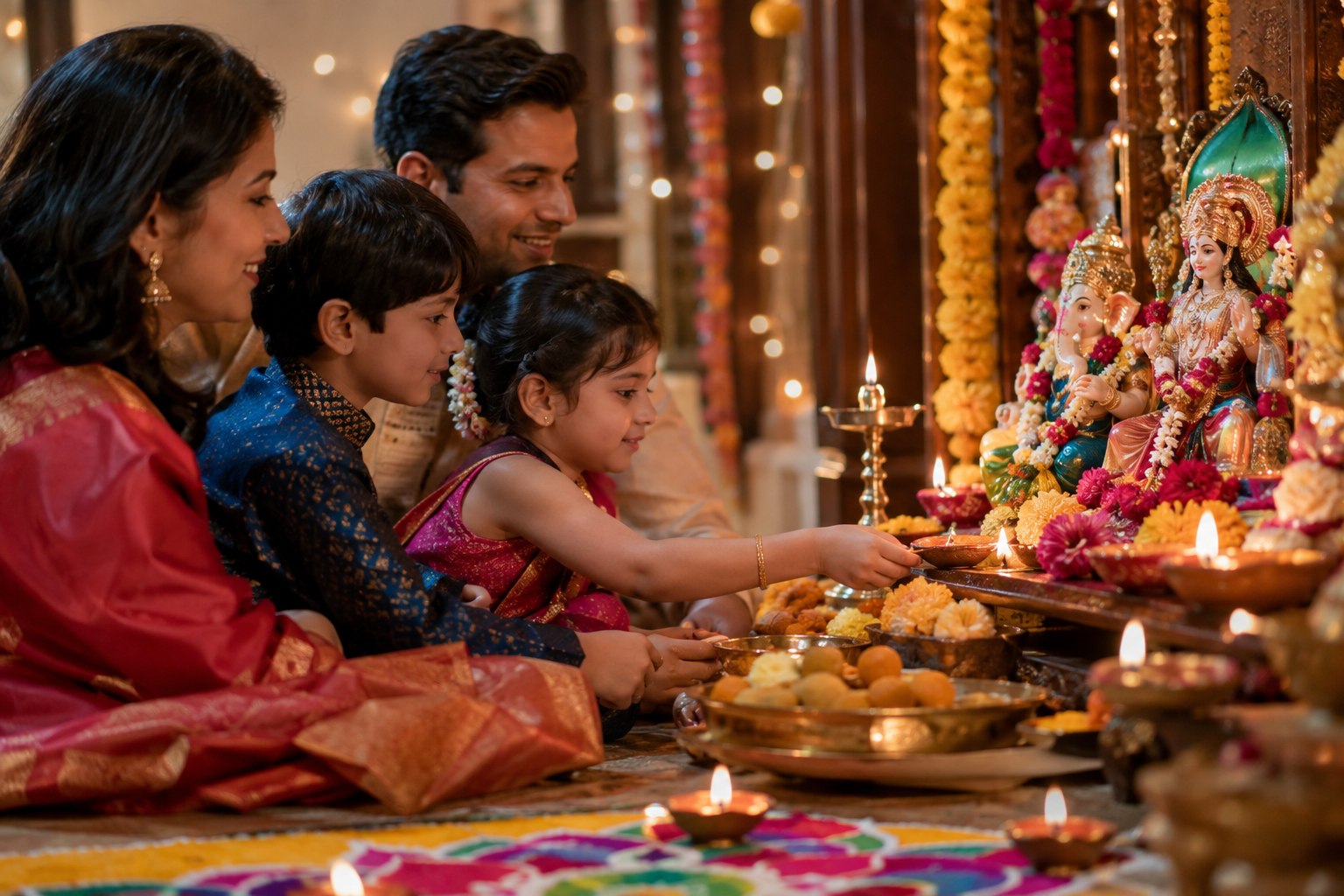
Diwali will be celebrated on Sunday, 8 November 2026. Known as Deepawali or the Festival of Lights, it is one of the most widely celebrated Hindu festivals and brings together Lakshmi-Ganesha Puja, diyas, rangoli, sweets, family gatherings and prayers for prosperity.
After weeks of preparation from Navratri and Dussehra to Karva Chauth, Ahoi Ashtami and Dhanteras Diwali becomes the brightest point of the festive season.
Yet the beauty of Diwali is not found only in how many diyas we light.
Its deeper message asks us to bring light into the parts of life where darkness has quietly accumulated: strained relationships, neglected responsibilities, unnecessary anger, financial carelessness or simply a lack of gratitude.
Preparing the Home for Lakshmi Puja
Diwali preparation traditionally begins with cleaning and organizing the home.
Floors are cleaned, entrances decorated, rangoli created and diyas arranged around balconies, doors and the home temple.
The custom of cleaning before welcoming Maa Lakshmi can also carry a symbolic meaning.
We prepare physical space for prosperity, but we can also create emotional space.
A family may use the days before Diwali to finish pending tasks, clear unnecessary clutter and resolve small disagreements.
A beautiful home feels even more auspicious when the people inside it are at peace with one another.
The puja area may be decorated with flowers, a clean cloth, rangoli and lamps. Idols or images of Maa Lakshmi and Lord Ganesha can be placed respectfully according to family tradition.
Why Lakshmi and Ganesha Are Worshipped Together
Maa Lakshmi represents prosperity, abundance and auspiciousness, while Lord Ganesha represents wisdom and the removal of obstacles.
Their worship together carries an important message.
Wealth without wisdom can easily be wasted.
Success without good judgment can create new problems.
Diwali therefore reminds us to seek prosperity together with the intelligence to use it responsibly.
Students may pray for knowledge and focus. Business owners may pray for ethical growth. Families may pray for financial security, health and peace.
The prayer does not need to be limited to “May we receive more.”
It can also include “May we use what we receive wisely.”
Performing Diwali Puja at Home
Families traditionally perform Lakshmi-Ganesha Puja during the auspicious evening period prescribed for their location.
The puja may include roli, akshat, flowers, sweets, fruits, incense, diya, coins, account books and other items followed in the family tradition.
Lord Ganesha is generally worshipped along with Maa Lakshmi, and some families also include Saraswati Puja, Chopda Puja or worship of business account books.
Because puja traditions vary considerably across regions, families should follow their established method or guidance from a trusted priest.
The most important part of the ceremony is focused participation.
Phones can be put aside.
Children can sit with elders.
Family members can take turns offering flowers or performing aarti.
For one evening, everyone can be fully present.
Lighting Diyas: More Than Decoration
Few images represent Diwali as beautifully as rows of glowing diyas.
The lamp symbolizes the victory of light over darkness and knowledge over ignorance.
But the diya can also become a personal reminder.
Every person has the ability to bring some light into another person’s day.
It may happen through encouragement, financial help, forgiveness or simply making time for someone who feels lonely.
Families could dedicate one diya to gratitude, one to ancestors, one to health and one to people facing difficult circumstances.
Children may even create small labels describing what each lamp represents.
This transforms decoration into reflection.
Making Diwali Meaningful for Children
For children, Diwali often means sweets, new clothes, decorations and gifts.
All of these can remain part of the celebration while parents also introduce the festival’s deeper values.
Children may help arrange the puja thali, create rangoli, clean diyas or prepare small gift packets for neighbours and support staff.
Parents can explain why Lakshmi and Ganesha are worshipped together and why homes are illuminated.
A simple family tradition could involve each person naming one thing they are grateful for before the Lakshmi Puja begins.
Children can also participate in giving.
Allowing them to choose toys, books or clothes in good condition to donate teaches that prosperity becomes more joyful when shared.
Celebrate Without Waste
Diwali celebrations can create significant waste when decorations, packaging and disposable items are used without thought.
Families can choose reusable decorations, traditional clay diyas and thoughtfully packaged gifts.
Flowers from puja can be composted where practical rather than mixed with plastic waste.
Food should also be prepared realistically.
An overflowing table may look festive, but excessive food that ultimately goes to waste does not reflect gratitude for abundance.
Smaller quantities can always be replenished when needed.
Celebration and responsibility can coexist beautifully.
Preparing the Complete Diwali Puja
For families looking to keep the festival preparation organized, the Deepawali Uphaar Kit brings together traditional Diwali worship essentials for Lakshmi-Ganesha Puja.
The kit can be especially useful for families who want the required samagri ready in one place instead of searching for individual items at the last moment.
For diya lighting, Floating Oil Wicks offer a convenient option for home temples and festive arrangements.
Families who perform regular worship before and after Diwali can also use a Daily Puja Kit to keep everyday essentials organized.
Preparing samagri beforehand leaves more time for what the festival is really about prayer, family and celebration.
Remembering Those Who Make Diwali Possible
Diwali preparation often involves many people beyond the immediate family.
Delivery workers bring gifts and supplies. Domestic workers help prepare homes. Shopkeepers work long hours. Artisans create diyas, decorations and festive products.
The festival offers an opportunity to recognize their contribution.
A thoughtful bonus, gift, meal or simple expression of gratitude can make the season more meaningful.
Prosperity should travel outward.
If Maa Lakshmi has blessed a household with enough, Diwali is a beautiful time to ensure that someone else experiences a little more abundance as well.
The Light That Remains After Diwali
By the next morning, some diyas will have burned out.
Rangoli may begin to fade.
The sweets will gradually disappear.
But the values celebrated on Diwali do not have to end.
The real question is whether the light remains in our behaviour.
Do we speak more kindly?
Do we manage money more responsibly?
Do we appreciate our family more openly?
Do we share what we have?
The brightest Diwali is not necessarily the house with the most lights.
It is the home where gratitude, wisdom, generosity and peace continue glowing after the festival is over.
May Maa Lakshmi bless every household with meaningful prosperity. May Lord Ganesha remove obstacles and guide every decision with wisdom. May Diwali 2026 illuminate our homes, relationships and hearts with happiness, health and hope.
For authentic Diwali puja kits, diya essentials, oil wicks and devotional products, visit Puja Samagri Online.
#Diwali #Diwali2026 #Deepawali #Deepawali2026 #FestivalOfLights #LakshmiPuja #MaaLakshmi #LordGanesha #GaneshPuja #LakshmiGaneshPuja #DiwaliPuja #DiwaliPujaKit #DeepawaliKit #DiwaliDiyas #FloatingOilWicks #Rangoli #FestiveSeason #Prosperity #Gratitude #FamilyCelebration #IndianFestivals #HinduTraditions #PujaSamagriOnline