



First Sawan Somwar 2026: Beginning a Month of Shiva Bhakti with Consistency and Calm

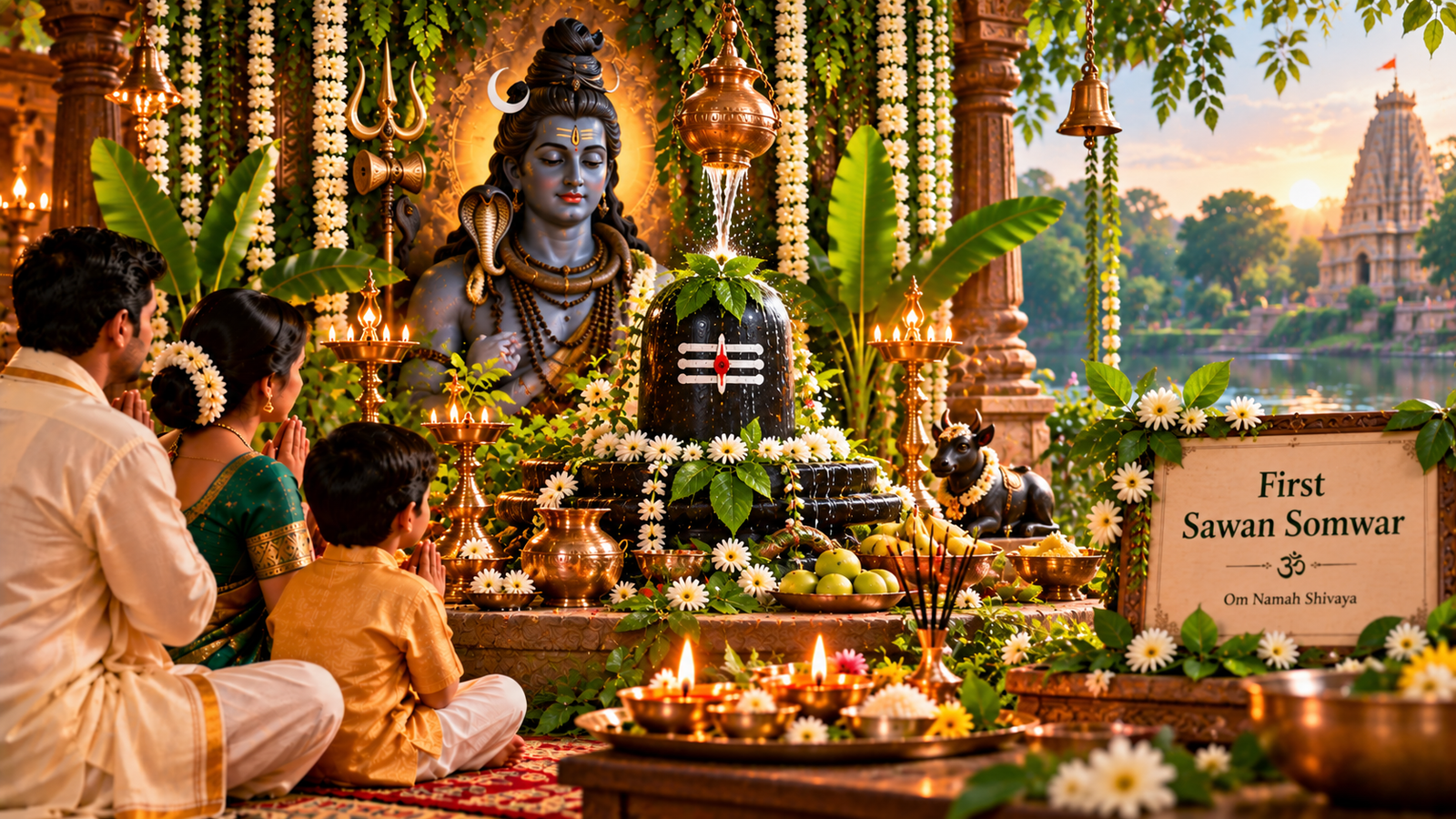
The first Sawan Somwar will be observed on Monday, 3 August 2026, according to the North Indian Purnimanta calendar. In 2026, the sacred month of Sawan begins on Thursday, 30 July, making 3 August the first of four special Mondays dedicated to Lord Shiva.
For many devotees, the first Sawan Somwar creates the spiritual direction for the entire month. Temples become filled with the sound of “Har Har Mahadev,” families prepare for Jal Abhishek, and devotees observe fasting according to their health and family traditions.
However, the deeper value of the first Somwar is not limited to completing one puja or vrat. It offers an opportunity to begin a steady spiritual routine that can continue throughout Sawan.
Preparing for the First Sawan Somwar
The puja area may be cleaned the previous evening so the morning begins without unnecessary hurry. Devotees can prepare a Shivling or image of Lord Shiva, along with water, flowers, bilva leaves, roli, akshat, fruits, incense and a diya.
The morning may begin with a bath, clean clothes and a few moments of silence. Water can then be offered to the Shivling while chanting “Om Namah Shivaya.” Some families also offer milk, curd, honey or other traditional abhishek ingredients according to their established worship practice.
Offerings should be made carefully and without unnecessary waste. The quantity of water or milk does not determine the strength of devotion. A small offering presented with attention and gratitude can carry greater meaning than an elaborate ritual performed mechanically.
After the abhishek, devotees may offer bilva leaves, flowers and fruits, recite the Shiva Chalisa or perform a simple aarti.
Understanding the Sawan Somwar Vrat
Some devotees observe a complete fast, while others consume fruits, milk or a simple satvik meal. The vrat should be adapted according to age, health and personal capacity.
Pregnant women, elderly devotees, children and people managing medical conditions should not feel pressured to undertake a strict fast. Prayer, self-control and compassionate behaviour are also meaningful ways to participate.
Fasting becomes spiritually valuable when it simplifies the day and helps control distractions. Avoiding food while remaining impatient, angry or unkind weakens the purpose of the vrat. Sawan Somwar encourages discipline in speech, thoughts and behaviour alongside dietary restraint.
Devotees may reduce unnecessary phone use, avoid arguments and dedicate time to Shiva mantras or quiet reflection. Even a few minutes of focused chanting can establish a peaceful rhythm for the day.
Beginning with One Sustainable Practice
The first Somwar is an ideal time to choose one simple practice for the entire month. A devotee may decide to light a diya every evening, chant “Om Namah Shivaya” 108 times, visit a Shiva temple on Mondays or perform a short water abhishek at home.
The practice does not need to be complicated. What matters is consistency.
Spiritual habits often fail when they are made too demanding at the beginning. Sawan teaches that devotion can grow through small actions repeated sincerely. One diya lit daily or one mantra chanted with complete attention can gradually create greater calm.
Families can also choose a shared practice. They may gather for a short Monday evening aarti, prepare satvik food together or read one Shiva story every week. These moments help devotion become part of family life rather than an individual responsibility.
Including Children in Shiva Worship
Children can help wash the puja thali, arrange flowers or place bilva leaves near the Shivling. Parents may explain that Lord Shiva represents calmness, courage and the ability to remain balanced during difficult situations.
Instead of making children memorise long rituals, families can encourage them to participate through simple actions. They may chant “Om Namah Shivaya,” draw a picture of Lord Shiva or share one thing for which they feel grateful.
Such participation allows children to associate worship with peace and family connection rather than fear or obligation.
Keeping Puja Preparation Simple
A Rudra Abhishek Kit can help devotees arrange traditional Shiv puja essentials without last-minute searching. A Jal Abhishek Patra Shringi may support an organized water offering, while a Traditional Puja Thali Set can keep flowers, roli, akshat and prasad neatly arranged.
For the morning or evening aarti, Floating Oil Wicks can provide a convenient diya arrangement.
Having the essentials prepared in advance allows the mind to remain focused on prayer instead of logistics.
Carrying Shiva’s Calm Through Sawan
Lord Shiva is often remembered as the deity of transformation, stillness and inner strength. Worshipping Him becomes more meaningful when these qualities begin to appear in our everyday behaviour.
Remaining calm during a disagreement, letting go of resentment or responding thoughtfully under pressure can become practical forms of Shiva bhakti.
The first Sawan Somwar is therefore not only the beginning of a vrat. It is an invitation to establish a calmer and more disciplined way of living throughout the sacred month.
May Lord Shiva bless every devotee with clarity, patience and the strength to remain consistent on the spiritual path. May the first Sawan Somwar fill every home with peace and begin a month of sincere devotion.
For authentic Shiva puja products, Rudra Abhishek essentials, puja thalis, diyas and oil wicks, visit Puja Samagri Online.
#FirstSawanSomwar #SawanSomwar2026 #ShravanSomwar #Sawan2026 #LordShiva #Mahadev #HarHarMahadev #OmNamahShivaya #SomwarVrat #ShivaPuja #JalAbhishek #RudraAbhishek #BilvaLeaves #ShivBhakti #SatvikLiving #FamilyDevotion #HomePuja #PujaThali #OilWicks #HinduFestivals #PujaSamagriOnline