



Sawan Shivratri 2026: Offering Our Burdens to Shiva Through Prayer and Abhishek

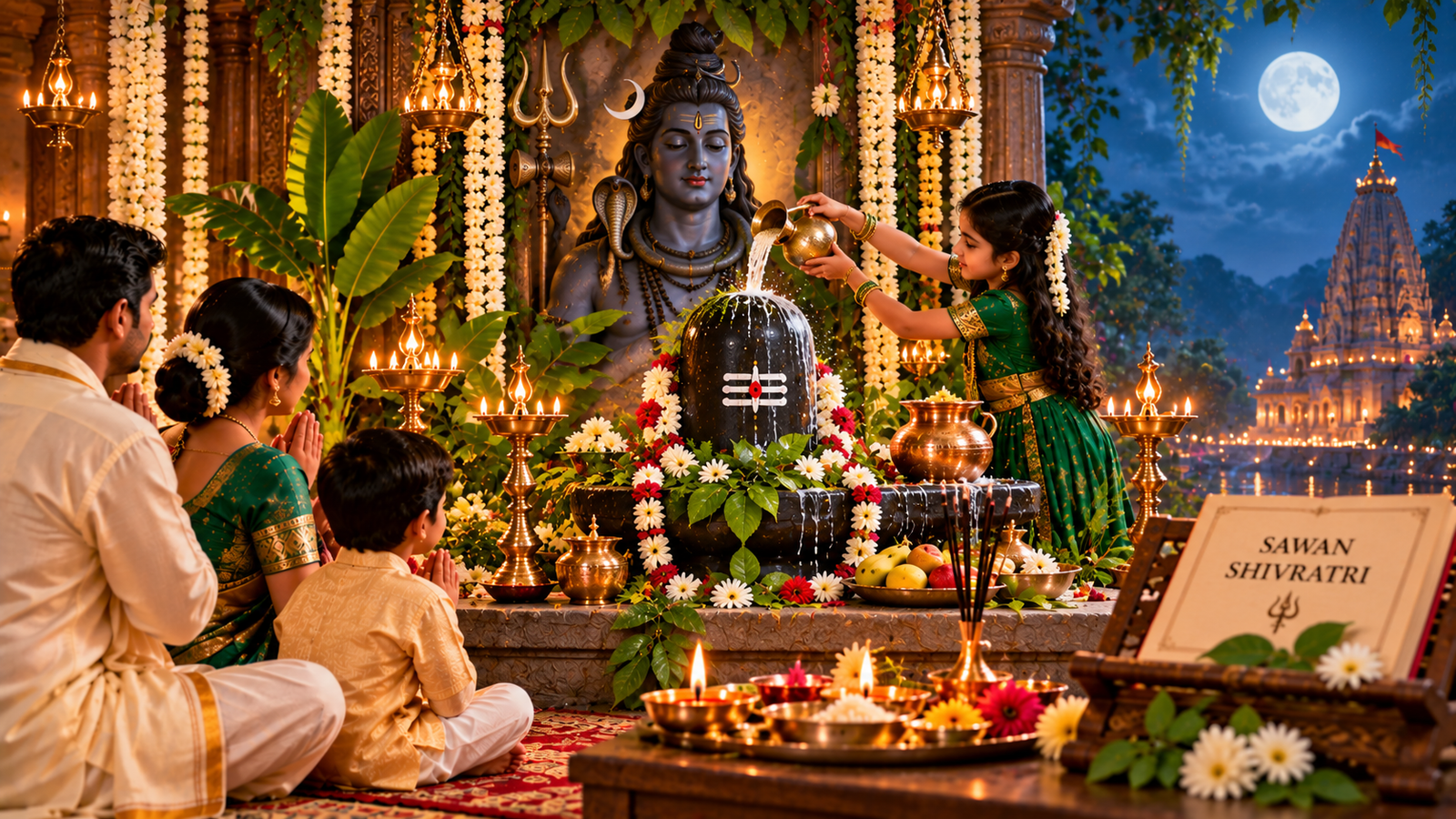
Sawan Shivratri will be observed on Tuesday, 11 August 2026. The festival falls on the Krishna Paksha Chaturdashi of the Sawan month and is dedicated to fasting, Shivling worship and night prayers. Devotees may perform puja during the different prahars of the night, with the precise timings varying by location.
While Maha Shivratri is celebrated widely across India, Sawan Shivratri holds special importance for devotees following the North Indian Shravan calendar. The sacred month is already filled with Shiva bhakti, and this night provides a focused opportunity to surrender worries, seek forgiveness and pray for inner transformation.
Preparing for Sawan Shivratri
The home temple or worship area may be cleaned before the puja begins. Devotees can prepare a Shivling, water, Gangajal, flowers, bilva leaves, fruits, incense, a diya and other offerings followed within their family tradition.
Many devotees visit a Shiva temple, while others perform the worship at home. Both forms can be meaningful when approached with sincerity and respect.
The puja may begin with a simple sankalp or statement of intention. Rather than praying only for material outcomes, devotees can ask for freedom from anger, confusion, fear or habits that disturb their peace.
Water may then be poured slowly over the Shivling while chanting “Om Namah Shivaya.” Some families perform a more detailed Rudrabhishek with milk, curd, honey and other traditional ingredients.
Whatever method is followed, offerings should be used responsibly. Devotion should not lead to food waste or excessive consumption of natural resources. A modest abhishek performed with complete attention can be spiritually fulfilling.
The Meaning of Jal Abhishek
Water plays a central role in Shiva worship. Its gentle flow can be understood as a symbol of cleansing and release. As water moves over the Shivling, devotees may mentally offer their stress, regret and emotional burdens to Lord Shiva.
This does not mean ignoring responsibilities or expecting difficulties to disappear without effort. Surrender allows the mind to become calm enough to respond wisely.
A devotee may reflect on one burden that has been carried for too long. It could be resentment towards another person, fear about the future or guilt about a past mistake. During the abhishek, the person can pray for the strength to address it honestly and then begin letting it go.
In this way, Jal Abhishek becomes more than a physical ritual. It becomes a moment of emotional clarity.
Fasting and Night Worship
Some devotees observe a complete fast, while others consume fruits, milk or simple vrat-friendly food. The fast should be adapted according to physical health and family custom.
The night may be divided into four prahars, with Shiva worship performed during one or more of these periods. Devotees may offer water, chant mantras, sing bhajans or sit quietly in meditation. Exact prahar and Nishita Kaal timings depend on location and should be checked through a local panchang.
Remaining awake throughout the night is a traditional practice for some devotees, but it should not become a source of unhealthy pressure. A person who cannot remain awake may perform a focused evening puja and rest with Shiva’s name in the heart.
The aim of jagran is spiritual alertness. Staying physically awake while remaining distracted does not carry the same meaning as spending even a shorter period in sincere remembrance.
Creating a Peaceful Family Observance
Families can perform a collective evening abhishek in which each person offers a small amount of water. Afterward, everyone may sit together for the Shiva aarti or chant “Om Namah Shivaya.”
Children may participate by placing flowers, ringing the bell gently or helping distribute prasad. Parents can explain that Shiva drank the poison during Samudra Manthan to protect creation, teaching courage and responsibility in difficult circumstances.
The lesson should not be that a person must silently absorb every hardship. Instead, Shiva’s example can inspire us to manage difficulty without spreading bitterness to others.
Families may also use the evening to release a small conflict. Apologising, forgiving or speaking calmly about an unresolved misunderstanding can become a living expression of purification.
Arranging the Puja Essentials
A Rudra Abhishek Kit can help keep traditional materials ready for the worship. A Jal Abhishek Patra Shringi may be used for a controlled and respectful water offering.
A Traditional Puja Thali Set can help organize roli, akshat, flowers and prasad. For the evening or night aarti, Floating Oil Wicks can provide a steady devotional flame.
Preparing these items early helps avoid interruptions during worship and allows the family to remain present.
Taking the Abhishek Beyond the Ritual
The peace created during Sawan Shivratri should not disappear when the puja ends. Its true value is seen in the way devotees behave the following day.
Speaking more patiently, reducing unnecessary anger and approaching responsibilities calmly are ways of carrying Shiva’s presence into ordinary life.
The Shivling represents steadiness amid change. Life may continue to bring uncertainty, but the mind can learn to remain centred. Sawan Shivratri reminds us that release does not always happen dramatically. Sometimes, it begins with a quiet prayer and the willingness to stop carrying what no longer serves us.
As water flows over the Shivling and the diya glows through the night, may Lord Shiva remove fear, calm restless minds and guide every devotee towards wisdom.
May this Sawan Shivratri bring purification to the heart, harmony to the family and strength to face life with faith.
For authentic Shiva puja products, Rudra Abhishek kits, Jal Abhishek essentials, puja thalis and oil wicks, visit Puja Samagri Online.
#SawanShivratri #SawanShivratri2026 #ShravanShivratri #LordShiva #Mahadev #HarHarMahadev #OmNamahShivaya #ShivratriVrat #ShivaPuja #JalAbhishek #RudraAbhishek #ShivlingPuja #NightPuja #FourPraharPuja #BilvaLeaves #SpiritualCleansing #InnerTransformation #FamilyDevotion #PujaThali #OilWicks #HinduFestivals #PujaSamagriOnline