



Raksha Bandhan, Varalakshmi Vrat, Gayatri Jayanti and Shravana Purnima 2026: Four Expressions of Sacred Protection

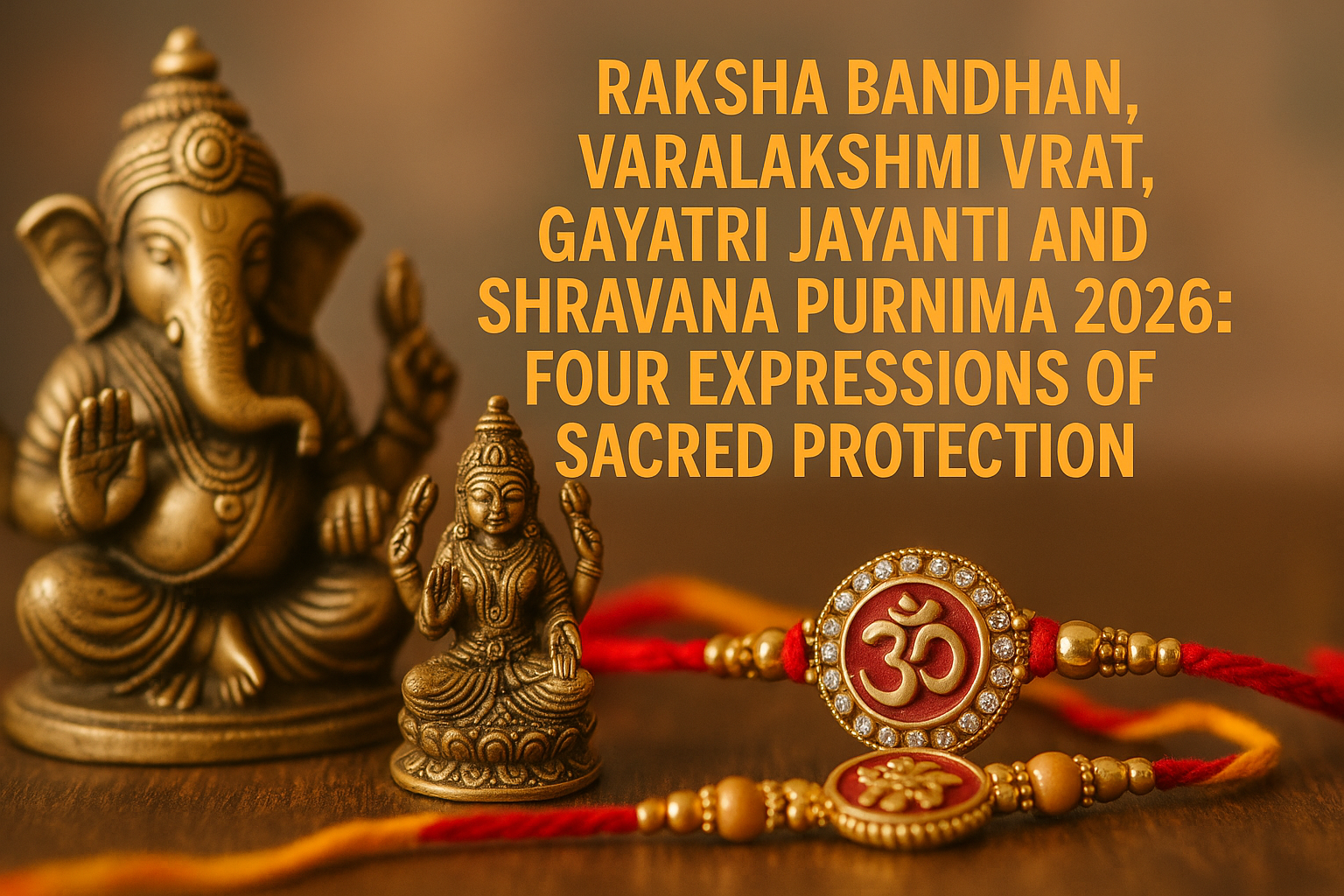
Friday, 28 August 2026, brings together four meaningful observances: Raksha Bandhan, Varalakshmi Vrat, Gayatri Jayanti and Shravana Purnima. Raksha Bandhan celebrates the bond between siblings, Varalakshmi Vrat invokes the blessings of Goddess Lakshmi, Gayatri Jayanti honours Maa Gayatri and the power of sacred wisdom, while Shravana Purnima completes the lunar month with prayer and gratitude.
Although the observances have different rituals, each carries a form of protection. A rakhi represents protection through relationships. Varalakshmi worship represents the protection and nourishment of the household. Gayatri worship offers protection through wisdom and right understanding. Shravana Purnima invites devotees to preserve the discipline and devotion cultivated during the sacred month.
Together, these traditions create a day centred on family, prosperity, knowledge and spiritual responsibility.
Raksha Bandhan: Protection Through Mutual Care
Raksha Bandhan begins with the preparation of a rakhi thali containing a diya, rakhi, roli, akshat and sweets. The sister traditionally applies tilak, ties the sacred thread and prays for her brother’s well-being. The brother offers a gift and promises care and support.
For New Delhi, the Raksha Bandhan thread ceremony is listed for the morning of 28 August 2026, with Bhadra ending before sunrise. Timings vary by location, so families should consult their local panchang before planning the ceremony.
The meaning of rakhi is stronger when protection is understood as mutual. Sisters also guide, defend and encourage their brothers. Siblings may live in different cities or follow very different paths, but the sacred thread reminds them to remain emotionally available to one another.
Protection should not mean control. A healthy sibling bond allows each person to grow independently while knowing that support is available during difficult times.
Families may use the occasion to resolve an old misunderstanding, call a sibling who lives far away or remember a brother or sister who cannot be physically present.
Varalakshmi Vrat: Prosperity with Purpose
Varalakshmi Vrat is observed by many families, particularly in southern India, on the Friday associated with Shravana Purnima. The vrat is dedicated to Goddess Varalakshmi, a form of Maa Lakshmi worshipped for the health, harmony and prosperity of the household.
The puja space may be decorated with flowers, leaves, lamps and a sacred kalash according to regional tradition. Offerings can include turmeric, kumkum, fruits, sweets and other auspicious items followed within the family.
Some women observe a fast and listen to the Varalakshmi Vrat katha. The vrat should be adapted according to health, age and individual circumstances. Prayer should bring strength and reassurance rather than physical harm.
Prosperity on this day should not be understood only as financial wealth. A prosperous home also contains good health, respectful communication, sufficient food, emotional security and the wisdom to use resources responsibly.
Families may honour Maa Lakshmi by reducing waste, helping someone in financial difficulty or sharing food with others. Wealth becomes sacred when it supports well-being beyond one household.
Gayatri Jayanti: Protection Through Wisdom
Gayatri Jayanti honours Maa Gayatri, who represents divine knowledge, spiritual illumination and the power of the Gayatri Mantra. The observance falls on Shravana Purnima in the 2026 calendar.
Devotees may begin with a bath, light a diya and sit quietly for mantra chanting. Those who follow an established spiritual practice may recite the Gayatri Mantra according to the guidance they have received.
The mantra should not become hurried repetition. Its deeper purpose is to direct the mind towards clarity and wise understanding. Even a short period of focused chanting can help devotees slow down and examine their thoughts.
Gayatri Jayanti is especially relevant in a time when people receive constant information from phones, social media and digital platforms. Information does not automatically become wisdom. Wisdom requires patience, reflection and the ability to distinguish truth from distraction.
Parents can include children by encouraging reading, thoughtful questions and respect for teachers. A family may donate books, support a student or spend time learning something meaningful together.
Shravana Purnima: Completing the Month with Gratitude
Shravana Purnima marks the full moon of the sacred Shravana month. In different regions, it is associated with several religious and cultural traditions, including Raksha Bandhan, Gayatri Jayanti, Narali Purnima and forms of Vedic study and renewal.
For devotees who observed Sawan Somwar, Shiva worship or other disciplines during the month, the day offers an opportunity to pause and express gratitude.
The completion of Sawan does not need to mean the end of spiritual practice. One habit developed during the month can be carried forward. A devotee may continue lighting a diya, chanting a mantra, eating satvik food once a week or performing a short family aarti.
Sacred months are valuable because they help establish discipline. Their purpose is fulfilled when that discipline influences ordinary life after the calendar changes.
Organizing Four Observances at Home
Families observing more than one tradition on the same day can plan the worship in separate, clearly arranged stages.
The rakhi thali may be prepared for the sibling ceremony. Varalakshmi offerings and the kalash may be arranged according to the household’s tradition. A quiet space can be reserved for Gayatri prayer, while the evening diya may mark Shravana Purnima and the completion of the month.
A Traditional Puja Thali Set can help organize rakhi, roli, akshat, flowers and sweets. A Daily Puja Kit may support the general home worship arrangement.
For the Varalakshmi or evening Purnima aarti, Floating Oil Wicks can provide a steady devotional flame. Families may also explore the Religious Puja Kits collection for additional worship essentials.
The rituals should be arranged according to family custom and local timings rather than rushed into a single ceremony.
The Shared Message of the Day
These four observances show that protection can take many forms.
A sibling protects through loyalty and emotional support. Maa Lakshmi protects the household through nourishment and stability. Maa Gayatri protects the mind through wisdom. Shravana Purnima protects spiritual progress by reminding devotees to continue the values developed during Sawan.
The day encourages us to consider what kind of protection we provide to others. Do our words make family members feel secure? Do we use money responsibly? Do we guide children with patience? Do we protect relationships through honesty?
Sacred threads, kalash worship, mantra chanting and the full moon become more meaningful when their values are visible in daily behaviour.
May Raksha Bandhan strengthen every sibling relationship. May Maa Varalakshmi bless homes with health and purposeful prosperity. May Maa Gayatri illuminate every mind with wisdom, and may Shravana Purnima complete the sacred month with peace and gratitude.
For authentic puja products, puja thalis, religious kits, diyas and oil wicks, visit Puja Samagri Online.
#RakshaBandhan #RakshaBandhan2026 #Rakhi2026 #RakhiFestival #SiblingBond #BrotherSisterLove #MutualProtection #VaralakshmiVrat #VaralakshmiVrat2026 #MaaLakshmi #LakshmiPuja #GayatriJayanti #GayatriJayanti2026 #MaaGayatri #GayatriMantra #ShravanaPurnima #SawanPurnima #Sawan2026 #SacredWisdom #FamilyProsperity #HomePuja #PujaThali #OilWicks #HinduFestivals #PujaSamagriOnline